The short answer
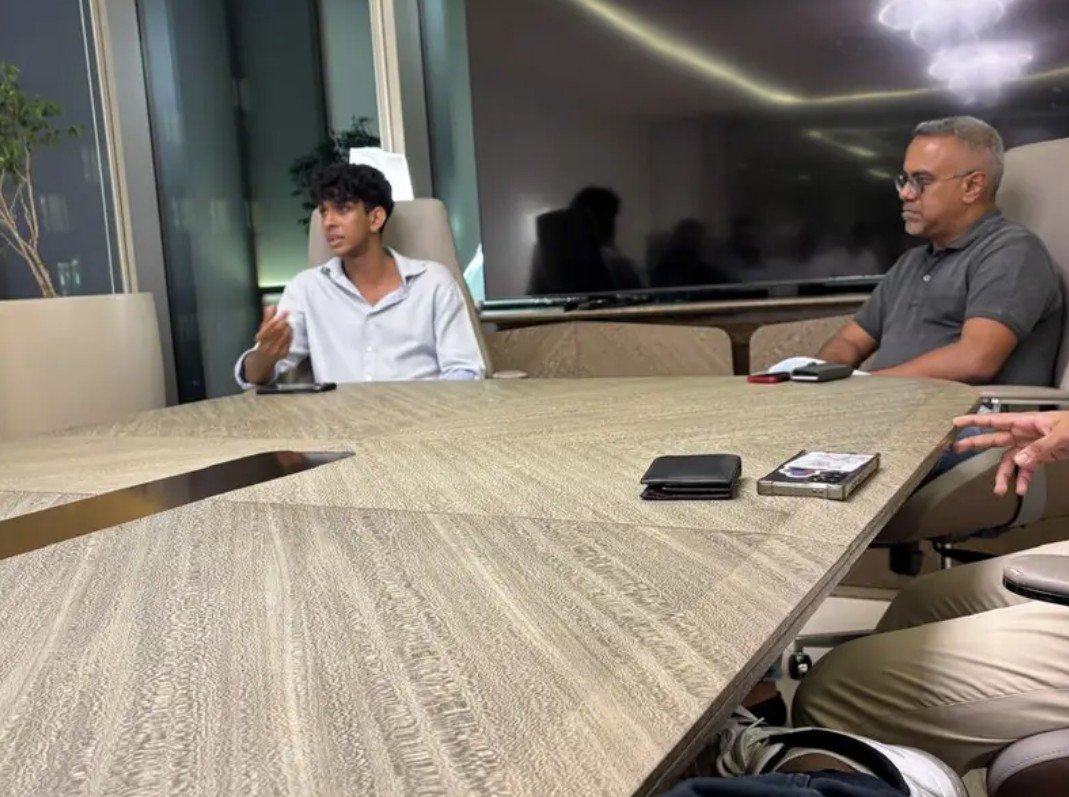
At a TiE Colombo fireside chat in 2025, Codax Founder Dineth Ratnayake spoke with Hariharan Padmanaban, Country Head for Hexaware Technologies in Sri Lanka, about building companies in an age of abundance. His four points: execution velocity beats the perfect foundation, being afraid of no kills growth, ownership is what drives the next generation's performance, and you do not need a career before you start.
Key takeaways
- Two companies with identical starting points can end up far apart in two years. The difference is execution velocity.
- Saying no constructively, and hearing no without being offended, both protect growth.
- The next generation performs on ownership: a stake, a contribution and a shared end goal.
- In an age of abundance, information, people and lessons are open to anyone. Waiting for permission is the real risk.
Why execution velocity matters more than the perfect foundation
Dineth opened with a story about a friend who had the same idea at the same time, about two years earlier. The friend spent a few thousand dollars on a website, a brand and a team to build the perfect foundation, and two years later had still not fully launched.
In the same two years, Codax worked with leading banks and telcos in Sri Lanka and scaled to global startups and enterprises in the US, the UK and Australia. "We are still early in our journey," Dineth said, "but the gap feels far greater than two years. We had identical starting points. The only difference was execution velocity."
The perfect foundation, in months
Twenty-one months of preparation, before anyone has bought anything. The alternative Dineth put to the room was simpler: just launch.
“In a world of abundance, those who act fast, build with urgency and execute relentlessly will learn and grow exponentially.”
Why being afraid of no will kill your growth
Whether you work inside a company or are building one, Dineth argued, fear of the word no is what quietly holds growth back. Taking the wrong deal or hiring the wrong person because you could not say no piles up over time into much larger problems. The same is true of being afraid to let go.
Saying no constructively benefits the relationship and helps the other person. Hearing no matters just as much. In its first eight months Codax built more than 40 versions of its pitch deck and was turned down or ghosted on every one. Countless iterations and pivots later it landed its first customer, getting better each time by evaluating honestly what had not worked.
40+
Versions of the pitch deck in Codax's first eight months
50+
Companies grown since, from enterprises to startups
3
Client regions: the Americas, Europe and Asia-Pacific
Starting out in the Sri Lankan market set the tone for competing globally. The lessons and the exposure were invaluable. As Dineth put it, if you can drive in Sri Lanka, you can drive anywhere in the world.
What motivates the next generation to perform?
Hariharan asked the question many leaders in the room were thinking: ten years ago discipline came with the job, so what can organisations do to motivate a generation that talks about work-life balance?
Dineth's answer, from working every day with young professionals, was ownership. The most successful entrepreneurs and leaders he has met share a natural drive to perform regardless of their position, and that drive comes from three questions every person is asking: what is my stake in this, what am I contributing to, and what is the end goal?
How to lead for ownership
Instead of
- Handing out a task
- Telling people your goals
- Protecting people from failure
Do this
- Share the objective behind it
- Give them a shared vision
- Give ownership, let them fail and hold them accountable
In a world where moving from job to job is more common every year, ownership is what keeps strong people building. It is also the culture Codax runs on, and the reason its team performs the way it does.
Do you need a career before starting your own venture?
The conversation closed on a question Dineth has debated for most of his life. For decades, access to information, talent and networks sat inside companies, so working somewhere first felt like the only route, especially in B2B.
That is no longer true. LinkedIn has opened up access to people. AI tools have opened up access to information. Thousands of founder stories and lessons are free to learn from, so you can avoid mistakes without paying for them yourself. In an age of abundance, experience alone does not decide who wins. Those who use what is available push ahead.
About TiE
TiE, The Indus Entrepreneurs, was founded in Silicon Valley in 1992 to help the next generation of founders. It has grown into one of the largest entrepreneur networks in the world, built on mentoring, networking, education, funding and incubation. TiE Colombo is the network's Sri Lanka chapter.
Questions and answers
Who spoke at the TiE Colombo fireside chat?
Dineth Ratnayake, Founder of Codax, in conversation with Hariharan Padmanaban, Country Head for Hexaware Technologies in Sri Lanka.
What is execution velocity?
Execution velocity is the speed at which a company turns decisions into action and learns from the result. Dineth's argument is that two companies with the same starting point end up far apart because one launches and learns while the other keeps perfecting the foundation.
What did Dineth say motivates younger professionals?
Ownership. People perform when they know their stake, what they are contributing to and what the end goal is. He recommends sharing objectives instead of tasks and giving people room to fail and be accountable.
Should you work somewhere before starting a company?
Dineth's view is that you no longer have to. Access to people, information and founder lessons is open to anyone, so the real risk is waiting for permission rather than starting.