The short answer
Robotics companies sell into enterprise by winning a buying committee that spans operations, engineering, safety, finance, IT and procurement, not a single champion. The strongest approach maps that committee early, designs pilots around the business case for the fleet with a signed baseline, uses founder and engineering credibility in outbound and at trade shows, and closes with measured case studies and reference site visits.
Key takeaways
- Demand is strong, with 542,000 industrial robots installed in 2024, but enterprise buyers are making fewer, harder-tested bets.
- The buying committee spans operations, engineering, safety, finance, IT and procurement, and each needs different proof.
- Pilots stall when they prove the robot works rather than the business case for the fleet.
- Agree a baseline and a payback model with finance before anything is installed.
- Founders, engineers and reference customers are the most credible voices in every channel, from outbound to trade shows.
Why is selling robotics into enterprise so hard?
Selling robotics into enterprise is hard because the buyer is not buying software they can switch off. They are putting a machine on a live production floor or in a working warehouse, next to people, inside a process that already pays the bills. Every function that could be hurt by a failure gets a say, and every one of them can slow the deal down.
Demand is not the problem. The International Federation of Robotics counted 542,000 industrial robots installed worldwide in 2024, more than double the figure from ten years earlier, with 4,664,000 robots now in operation. It expects about 575,000 installations in 2025 and more than 700,000 a year by 2028. In North America, A3 reported 36,766 robots ordered in 2025, worth $2.25 billion, the highest annual totals since 2022.
542,000
Industrial robots installed worldwide in 2024 (IFR)
4.66M
Industrial robots in operation, up 9% (IFR)
700,000+
Annual installations expected by 2028 (IFR)
$2.25B
North American robot orders in 2025 (A3)
The money is moving, but it is moving carefully. Interact Analysis cut its 2025 mobile robot forecast by $800 million and lowered its five-year growth rate from 26% to 21%, citing tariffs and policy uncertainty that caused companies to delay automation investment. When budgets tighten, buyers do not stop automating. They make fewer bets and ask harder questions of each one.
For a robotics company, that means the product is only half the sale. The other half is earning the confidence of a group of people who have watched automation projects fail before and who will carry the blame if yours does.
Who is on the buying committee for an industrial robot?
The buying committee for an industrial robot usually spans operations, engineering, safety, finance, IT and procurement, with a plant or site leader in the middle. Each one is answering a different question, and a deal closes only when all of them can say yes.
Gartner research puts B2B buying groups at five to 16 people across as many as four functions, and found that 74% of buyer teams show unhealthy conflict during the decision. Robotics deals sit at the top of that range. A warehouse automation project can touch the site general manager, the director of operations, a controls engineer, the health and safety lead, the CFO's office, the IT and OT security team and corporate procurement before a purchase order is raised.
The robotics buying committee and what each member needs
| Role | The question they are asking | What answers it |
|---|---|---|
| Plant or site leader | Will this hit my output and labour targets? | Throughput and uptime results from a comparable site |
| Operations | Will it disrupt the line or the shift pattern? | A deployment plan that protects production during install |
| Engineering and controls | Does it integrate with what we already run? | Integration detail, PLC and WMS compatibility, a named engineer |
| Health and safety | Is it safe next to our people? | Risk assessments, standards compliance, incident history |
| Finance | When does it pay back, and what if it does not? | A payback model built on the buyer's own numbers |
| IT and OT security | What does it connect to, and who can reach it? | Network architecture, data flows, security documentation |
| Procurement | Is this vendor safe to sign with? | Financial standing, support terms, references |
Gartner also found that buying groups that reach consensus are 2.5 times more likely to report a high-quality deal. The practical lesson for a robotics company is that the champion who invited you in cannot sell you to the rest of the committee alone. If you only speak to operations, safety and IT meet you for the first time at the point where they can say no.
Map the committee from the first meeting. Ask who will need to approve the pilot, who will need to approve the fleet and who has stopped an automation project before. The answers tell you which material to build and who needs to hear from you first.
How long does a robotics pilot take, and why do so many stall?
A robotics pilot typically runs for several months from scoping to sign-off, and the full cycle from first meeting to a fleet order often takes a year or more. Pilots stall when they are set up to prove the robot works rather than to prove the business case for scaling it.
The appetite to try is high. In the 2026 intralogistics robotics survey by Peerless Research Group with MHI, 52% of respondents already use one or more types of robot and a further 32% plan to deploy within three years. Only 3% have no plans at all. Trying robots is now normal. Scaling them is where most of the friction sits.
McKinsey's survey of industrial leaders found that for many companies, automated systems will account for 25 percent of capital spending over the next five years. The same work found that 71% of respondents named the capital cost of robots as a barrier and 61% pointed to a company-wide lack of automation experience. McKinsey also noted that buyers expect vendors to move quickly from prototype to scale. A pilot that cannot show the path to scale answers the wrong question.
A pilot that stalls vs a pilot built to scale
A pilot that stalls
- Success is defined as the robot working
- Only operations is involved
- Metrics are agreed after the pilot starts
- Finance sees the numbers at the end
- Safety and IT review it late
- No agreed decision date or fleet price
A pilot built to scale
- Success is defined as the business case for the fleet
- Every committee member signs the success criteria
- Baseline metrics are recorded before install
- Finance helps build the payback model up front
- Safety and IT approve the design before deployment
- A decision date and fleet terms are agreed in writing
The difference is rarely the technology. It is whether the pilot was designed as a sales process or as an engineering exercise. A good robot in a badly framed pilot still ends in a polite thank you and no order.
How do you prove ROI on automation to finance?
You prove ROI on automation by building the payback model with the buyer's own data, before the pilot starts, and then measuring the pilot against that model. Finance trusts numbers it helped shape far more than numbers a vendor brings.
Deloitte's 2025 smart manufacturing survey of 600 executives at large manufacturers found that respondents reported net impacts of 10% to 20% higher production output, 7% to 20% higher employee productivity and 10% to 15% more unlocked capacity from their smart manufacturing work. 78% allocate more than 20% of their improvement budget to it, and factory automation hardware was a first or second investment priority for 41%. The appetite for automation is there. What finance needs is evidence that your system delivers its share of those gains on their site.
In the Peerless and MHI survey, 52% of respondents weigh payback time when evaluating the business case. A strong ROI case for a robotics deal usually covers five things:
- Labour. Hours saved per shift, roles redeployed and the cost of vacancies the site cannot fill.
- Throughput. Units per hour before and after, and what extra capacity is worth in revenue.
- Quality and safety. Error rates, rework, damage and recordable incidents.
- Total cost. Hardware, integration, software, maintenance, training and downtime during install.
- Risk. What happens if the system underperforms, and how your terms share that risk.
Offer more than one commercial structure where you can. Robots as a service, staged purchase or performance-linked pricing can move a project from capital approval into an operating budget, which changes who needs to sign and how long it takes.
How do you cross the gap from pilot to fleet?
You cross the gap from pilot to fleet by treating the fleet decision as the real sale and planning for it from the first meeting. The pilot exists to remove the specific objections that would stop each committee member from approving the rollout.
The gap appears because a successful pilot and a funded rollout are decided by different people. Operations can approve a pilot from a local budget. A fleet across ten sites needs capital approval, corporate engineering standards, enterprise IT sign-off and procurement terms. If those people were not involved during the pilot, the rollout starts again from zero.
A pilot-to-fleet path for an enterprise robotics deal
- Month 1Discovery with the site leader, committee mapped, baseline data requested
- Month 2Success criteria and payback model signed by operations, engineering and finance
- Month 3Safety and IT security reviews completed before install
- Months 4 to 6Pilot runs on a live line or zone, results shared with the committee monthly
- Month 7Results reviewed against the baseline, site visit for corporate stakeholders
- Months 8 to 12Fleet business case, procurement terms and phased rollout across sites
Three habits close the gap more than anything else. Report pilot results to the whole committee, not only to the champion. Bring corporate stakeholders to the pilot site while it is running. And agree the fleet price and rollout terms in principle before the pilot ends, so a good result triggers a decision rather than a fresh negotiation.
Are trade shows still worth it for robotics companies?
Trade shows are still worth it for robotics companies, because buyers want to see machines move before they invite them on site. They pay off only when the show is one part of an account plan, with meetings booked in advance and follow-up ready before the stand is built.
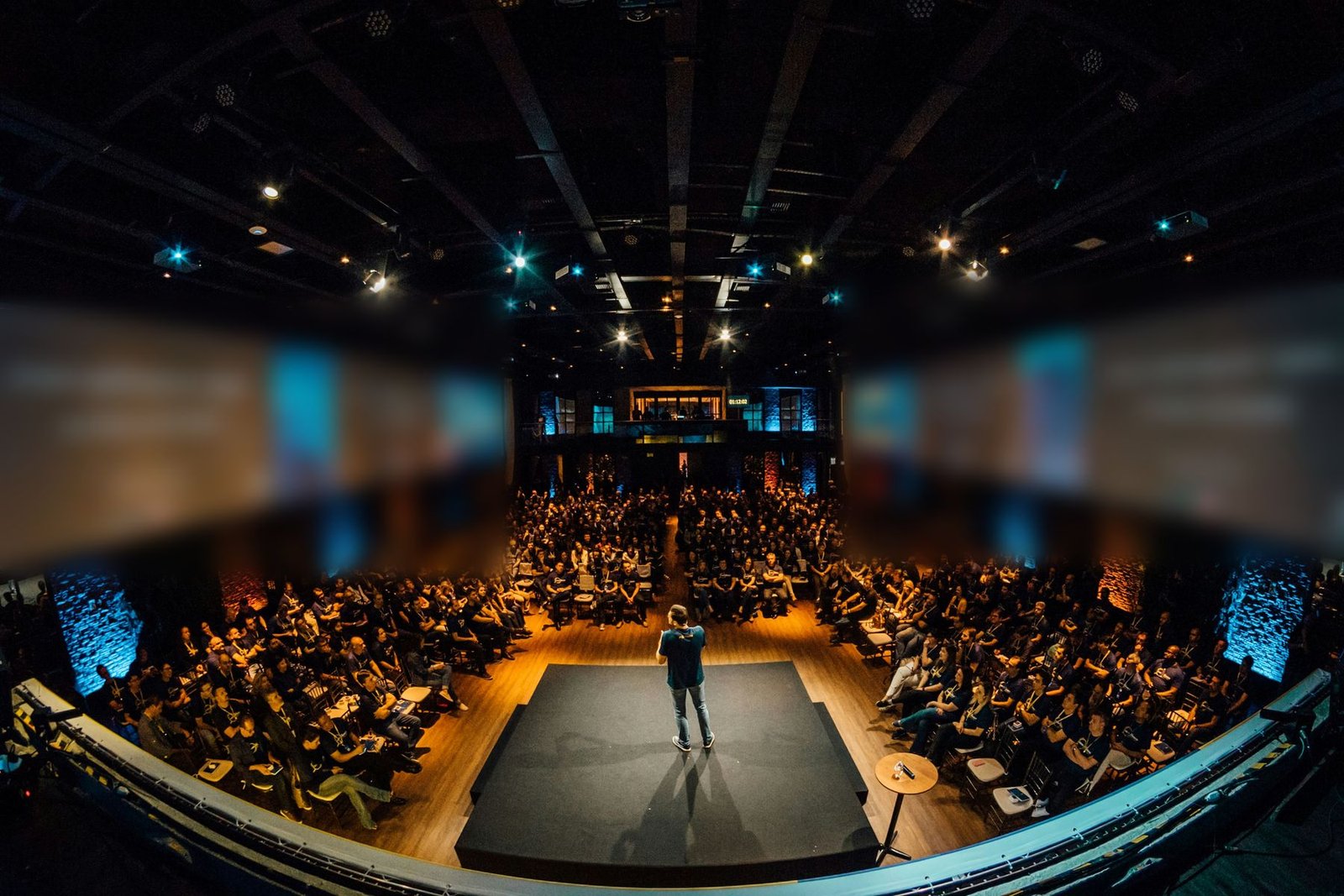
Attendance is growing. Automate 2025 in Detroit drew 45,000 registrants and more than 900 exhibitors, with 50% more registrants than the 2023 Detroit show. Jeff Burnstein, president of A3, said: "The tremendous growth of Automate this year demonstrates that automation is more relevant today than ever before." ProMat, MODEX, Hannover Messe and LogiMAT play the same role across logistics and manufacturing.
The mistake is treating the show as a lead source in its own right. Badge scans from a busy aisle rarely include the plant leaders and engineers on your account list. A show works when it is the meeting point for a campaign that started weeks earlier:
- Agree the target accounts and named contacts who are likely to attend.
- Send personal invitations from the founder or CTO four to six weeks before, with a reason to meet.
- Book live demonstrations and private briefings in fixed slots rather than waiting for footfall.
- Run a small dinner or site tour for the accounts that matter most.
- Follow up within days with material tailored to each person's role on the committee.
Smaller vertical events often outperform the flagship shows for this reason. A regional food manufacturing conference or a third-party logistics forum puts fewer people in the room, but more of them sit on the buying committees you need.
How should robotics companies run outbound to plant and operations leaders?
Robotics companies should run account-based outbound to a defined list of sites, reaching each role on the committee with a message about that role's problem. Generic automation pitches to a bought list of operations titles are ignored by the people who receive the most of them.
Start with the account list, not the contact list. Pick sites where the trigger for automation is visible: labour shortages in the region, a new distribution centre, a capacity expansion, a recall, a safety incident or a corporate automation target in the annual report. Deloitte found 48% of large manufacturers report moderate to significant difficulty filling production and operations management roles. Hiring patterns at a specific site are one of the clearest signals you can watch.
From site signal to pilot
A target site shows a visible reason to automate, such as hiring strain or expansion
Operations, engineering, safety and finance contacts are identified for that site
Each role receives a message about its own problem, from a credible sender
The site leader sees a live system at a show, a reference site or a demo cell
Success criteria and a decision date are agreed across the committee
Write to each role differently. The plant manager cares about output and staffing. The controls engineer cares about integration and maintenance. The safety lead cares about risk assessments. A single sequence that tries to speak to all three speaks to none of them.
Expect long timelines. In our work with an agentic AI healthcare firm selling front-office AI agents to health systems, another market with large committees and long evaluations, the median time from first touch to first meeting was 61 days. Leading with the clinical technology leader, the CMIO, produced 2.1x the meetings of other entry points, and retargeting known accounts produced meetings 4x cheaper than cold titles. The same logic applies on the factory floor. Lead with the technical role whose approval others defer to, and keep known accounts warm rather than chasing new names.
Why do founder and engineering credibility matter so much?
Founder and engineering credibility matter because industrial buyers trust engineers more than salespeople, and they are betting their own reputation on your machine. A founder or CTO who can talk about failure modes, safety cases and integration in detail earns a hearing a sales rep cannot.
Plant and operations leaders have seen glossy automation pitches fall apart on the floor. What they want is evidence that the people behind the product understand their environment. Founders with an engineering background, published technical views and visible time spent at customer sites carry that evidence with them.
Make that credibility visible. Put the founder and lead engineers on LinkedIn with specific, practical writing about deployments, lessons from pilots and how the system handles edge cases. Use them as the senders of outbound and event invitations. In the healthcare firm, the CEO as sender earned 3x the replies of other senders. In a cybersecurity services firm we worked with, founder-signed invitations earned 3x the acceptances and founder ads drew 2.4x the click-through of company ads.
“Industrial buyers are not short of vendors. They are short of people they believe will still pick up the phone when the robot stops at two in the morning. Founders and engineers are the proof of that.”
This does not take much of the founder's time. One to two hours a week of recorded interviews is enough to produce posts, articles and invitations in their own words, while the growth team handles everything around them.
How do case studies and site visits close robotics deals?
Case studies and site visits close robotics deals because they let a buyer see the system working in an environment like their own, with a peer who has already taken the risk. For many committees, a reference site is the single strongest piece of evidence available.
A good robotics case study is specific. It names the type of operation, the problem, the baseline, the deployment timeline and the measured results, ideally with a quote from the operations or engineering lead. It also explains what went wrong and how it was fixed, because experienced buyers distrust stories with no friction in them.
Building a reference programme for robotics
Agree references in the contract
Ask for case study and site visit rights during pilot and fleet negotiations, when goodwill is highest.
Record the baseline
Capture the before numbers at every deployment so every customer can become a measured result.
Write one story per segment
Build a case study for each vertical and site type you sell into, from food to third-party logistics.
Make the engineer the narrator
Let the customer's operations or controls lead explain the result in their own words, on video where possible.
Host visits on a schedule
Agree a small number of visit days with each reference site so prospects can see the system without wearing out the customer.
Bring the whole committee
Invite finance, safety and IT to visits, not only operations, so every objection is answered in person.
Customer voices carry further than vendor voices in every channel. In the healthcare firm's webinars, a customer speaker drew 2.6x the registrations of sessions without one. For a robotics company, a joint session with a reference customer's operations lead can do the same work as a dozen sales calls.
How does a growth department run robotics go-to-market?
A growth department runs robotics go-to-market as one system tied to qualified pipeline, with the account list, the committee map, the founder's voice, events, outbound and the reference programme all owned by one accountable lead. Split across a trade show agency, an outbound vendor and a junior marketer, the pieces rarely add up to a fleet order.
That is the model Codax runs. A senior growth lead and a delivery team work across ABM, outbound email and LinkedIn, founder presence, events, content, the website, AI search visibility and sales enablement, against one qualified pipeline number reviewed with leadership every month. Codax calls the method Signal-Based ABM, run in five phases: Assess, Fix, Build, Test and Scale.
For a robotics company, the assessment usually starts with the sales history: which pilots converted to fleets, which stalled and who was in the room for each. That record shows where the committee broke down and which proof was missing. The fix phase then rebuilds the site, the case studies and the founder's presence so that every member of the committee can find what they need before the first call.
Codax operators have driven $250M+ in pipeline and grown 50+ companies, from leading banks and telcos to startups, across the Americas, Europe and Asia-Pacific. You can see the method on how we work. For the wider enterprise playbook, read selling to enterprise as a startup, and for how events fit into a long enterprise cycle, see brand and events for large enterprises.
Questions and answers
How long is the sales cycle for industrial robotics?
A robotics pilot usually runs several months from scoping to sign-off, and the path from first meeting to a fleet order often takes a year or more. Cycles shorten when the whole buying committee signs the success criteria and the fleet terms are agreed in principle before the pilot ends.
Who makes the decision to buy warehouse or factory robots?
The decision is shared across a committee, usually led by a plant or site leader with operations, engineering and controls, health and safety, finance, IT and OT security and procurement. Gartner puts B2B buying groups at five to 16 people across as many as four functions.
Why do robotics pilots fail to scale?
Most pilots fail to scale because they are designed to prove the robot works, not to prove the business case for the fleet. Finance, safety and IT often see the project late, metrics are agreed after the start and there is no decision date. The fleet then needs approval from people who were never involved.
How do you calculate ROI for a robotics project?
Build the model with the buyer's own data before the pilot. Cover labour hours and vacancies, throughput and capacity, quality and safety, total cost including integration and downtime, and how the commercial terms share risk. Then measure the pilot against a baseline everyone has signed.
Are trade shows worth it for robotics startups?
Yes, when they are part of an account plan. Automate 2025 drew 45,000 registrants and more than 900 exhibitors. The return comes from booking meetings with target accounts weeks ahead, running live demonstrations in fixed slots and following up with material tailored to each committee role.
Sources
- World Robotics 2025 report, Industrial Robots, released by IFR, International Federation of Robotics
- A3: Robot orders grow 6.6% in 2025 as general industries drive broader automation adoption, Robotics 24/7
- Interact Analysis slashes mobile robot outlook amid tariff uncertainty, The Robot Report
- Unlocking the industrial potential of robotics and automation, McKinsey and Company
- 2025 smart manufacturing survey, Deloitte Insights
- 2026 intralogistics robotics survey: robotics moves into the mainstream, Supply Chain 24/7
- Gartner Sales Survey Finds 74% of B2B Buyer Teams Demonstrate Unhealthy Conflict During the Decision Process, Gartner
- Automate 2025 celebrates record-breaking success amid rising demand for robotics and automation, A3, Automate